The life of an undercover academic at Deliveroo: what moving from research to data science actually looks like
Miguel and Giorgia, data scientists at Deliveroo, both moved into tech after PhDs in economics. They share what the job actually involves, how it differs from academia in pace, teamwork and impact, what a typical day looks like, and walk through one experiment as an example of the questions they work on and the methods they use to answer them.
We are Miguel and Giorgia. Miguel joined Deliveroo as a Senior Data Scientist in early 2026, working on rider pricing, logistics and delivery speed, and Giorgia joined at the end of 2025, working on Dispatcher, the model that matches riders to orders. Before that, we both spent our careers in academia: Miguel as an economist, doing a PhD and working as a research and teaching assistant, and Giorgia as a consultant at the World Bank, after finishing a PhD at LSE.
When we were finishing our PhDs, we found ourselves in the same situation many people do when considering their first job outside academia. What exactly does a data scientist (or economist) at a tech company do? How does the work differ from academia? What does the day-to-day look like? And what can someone who was used to running experiments on political economy questions in fragile countries (or estimating changes on labour supply due to weather shocks) bring to a company like Deliveroo? In this blog post, we try to answer these questions and give an example of the kind of project we have been working on.
What we actually bring
Deliveroo faces complex logistical challenges, made harder by the three-sided nature of its platform: customers, merchants and riders. Changing one side of the network affects all of them, the data are messy, and decisions have to be made daily. Our job is to work out what evidence would actually settle a question, and then to produce it. That ranges from designing and running cluster-randomised experiments (most of the time), to quasi-experimental tools such as difference-in-differences or instrumental variables when experiments are not possible (less often), to descriptive analysis when neither is available.
Our academic training gave us precisely the tools for this. Many of the questions that reach us do not arrive in answerable form: someone wants to know whether a pricing lever works, and the first part of our job is to turn that into something that can be estimated, with a defined comparison, population and outcome. Getting this step wrong cannot be fixed later with better methods. The rest requires the causal inference we learned during our PhDs, and the judgement to decide which pieces of evidence are worth assembling when none of them is clean. And presenting work to convince stakeholders from very different backgrounds, much like an academic seminar, happens constantly. So even if we no longer work on the political economy of fragile countries or on the impact of weather shocks, our academic training has been a complement to this job rather than a substitute.
Differences from academia
Working here differs from academic life in many ways. We will focus on three: pace, being part of a team, and impact.
Pace is a big factor at Deliveroo. Urgent requests have to be answered in hours or days rather than weeks. Most projects run one or two months, and a very long one takes six, from inception through design and implementation to analysis. That is a long way from economics academia, where publication timelines are measured in years. The goal is not the perfect set of results, with dozens of pages of appendices ruling out every unlikely explanation. It is to produce convincing, high-quality evidence in time to inform a decision. The identification strategy and the standard of inference do not move; what goes is the referee-proofing.
In academia, we spent most of our time working alone on our own projects. Here, everything happens as part of a team. When designing an experiment, we work with software and machine learning engineers on how best to deploy it, and with other data scientists to debate the design and the analysis. We shape project ideas with our product manager and with leadership, agreeing on what is worth doing and in what order, and with the operations teams who run these systems day to day and who will act on whatever we find. We are all working towards the same goals, and we win or lose together, which makes the environment a genuinely collaborative one.
The third difference is impact. On a regular basis, we run experiments that affect millions of customers and thousands of riders across the globe, and the goal is never to learn something for its own sake. It is to inform what we do. When and where should we invest our budget? How can we get the most out of different pricing levers? Rather than a result that lands in a journal years later, the answers here change what the company does within weeks, directly influencing the lives of all our customers. This, to us, is the most exciting part of the job.
What the day-to-day looks like
Our day-to-day is mostly a mix of meetings for the different projects we are responsible for and time to work on these. The former takes on average around 25% of our day, while the latter takes the remaining 75%.
We have a set of team-specific meetings that vary in cadence. Every day we have a short stand-up with all members of the team, where we give quick updates on what we have worked on, what we plan to work on next, and anything that is blocking us. Every other week we set the goals for the next two weeks, which is also where we argue about priorities and change course when something is not working. Once a month, an area review with leadership takes that discussion up a level and sets the bigger picture. The remaining meetings are project-specific: with other data scientists to discuss designs and coordinate on experiments, with engineers to understand what a project needs to be built, and with product managers and leadership to agree on what we do next and update them on where projects stand.
The rest is what we call “DS time”. We each usually have four to six projects at different stages, so on a given day we might be doing power calculations for one, writing up an experiment design for another, checking that an experiment which just launched is behaving as expected, and writing a blog post about our life at Deliveroo. The biggest single chunk goes on data work: building pipelines, writing analysis scripts, digging into results and turning them into something that makes the takeaway obvious. AI tools have become routine here, including some built internally, and we use them to write and check code, build dashboards, stress-test designs and ideas, and draft first versions of write-ups. Every day is different, and what we pick up depends on what is urgent.
One project in more detail
A lot of our work involves experimenting on the delivery network itself, from how we pay riders to how we match them to orders. Experiments in this area are difficult because 1) we work in a network, so changes in one place affect the behaviour of riders and customers in other places, and 2) the number of areas we can randomise over is limited, which leaves us with very little statistical power. Standard A/B tests are therefore unreliable, and we rely on cluster randomised switchback designs to make progress on these questions.
One of Giorgia’s recent projects is a good example. Dispatcher has to balance two things: how much time riders spend on each delivery, and how long customers wait. Stacking, where one rider delivers several orders together, shows the tension well: rider time per order falls, but some customers may wait a little longer. One of the rules Dispatcher follows is a cap on the combined value of the orders it is allowed to stack, and Giorgia’s experiment tested what happens when that cap is raised. Dispatcher runs separately for each cluster, a geographic area with its own riders and orders, and within a cluster every assignment changes what is left for every other rider, so a change aimed at a few orders can affect all of them. Randomising individual orders was therefore not an option. Instead, whole clusters switched between the old and the new cap on a randomised schedule.
Stacking went up, as intended, and simulations run before the experiment had predicted that customers would pay for it with later deliveries. Instead, customer waiting times came out flat and riders spent less time on each delivery, so the change helped one side without hurting the other. The more interesting part was working out why. The stacks that only the higher cap made possible were few and, on their own, harder deliveries: larger, slower to prepare, and more often triple stacks (three orders assigned to a single rider). But their existence gave Dispatcher more options everywhere else. Single orders were assigned sooner, riders reached the restaurant sooner for every type of delivery, and they arrived less late in exactly the cases where Dispatcher had expected them to be late. A standard A/B test would have missed this, because the gain came not from the stacks the change unlocked, but from what they did to the rest of the network.
Would we do it again?
When we were finishing our PhDs, none of this was obvious to us, and we worried for a long time about whether leaving academia meant giving up the part of the work we actually enjoyed. We could not be happier with our transition to Deliveroo. We still spend our days designing experiments and arguing about identification, except that now the answers change what we do next month and reach customers and riders across multiple markets.
About Miguel Fajardo
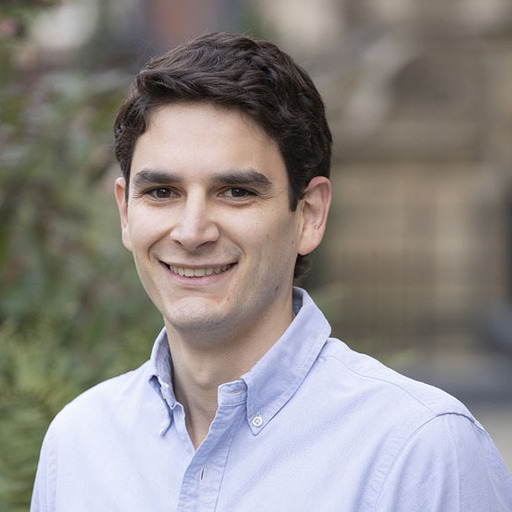
I’m a Senior Data Scientist at Deliveroo, based in London, working on rider pricing, logistics and delivery speed. Before joining in early 2026, I spent my career in academia as an economist, doing a PhD and working as a research and teaching assistant, running experiments on political economy questions in fragile countries. Outside of work, I love sports, from football (huge Real Madrid fan!) to volleyball and golf.
About Giorgia Cecchinato
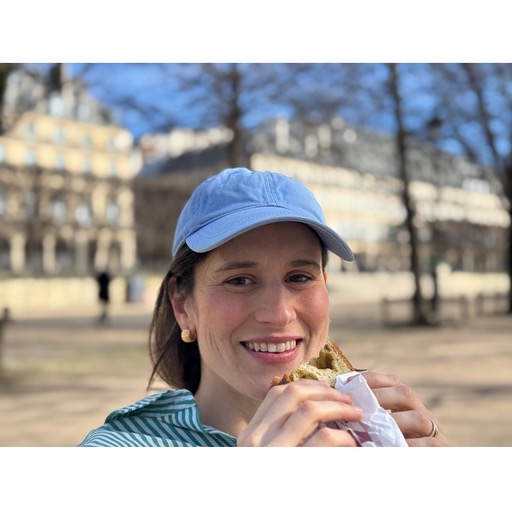
I’m a Data Scientist at Deliveroo, based in London, working on Dispatcher, the model that matches riders to orders. I joined at the end of 2025, after a PhD at LSE, where I studied how labour supply responds to weather shocks, and a spell as a consultant at the World Bank. Outside of work, I love running in Epping Forest and sport climbing. Both activities must be followed by filter coffee and a croissant.